

GLOBAL TRADE INTELLIGENCE
GLOBAL TRADE INTELLIGENCE
GLOBAL TRADE INTELLIGENCE
GLOBAL TRADE INTELLIGENCE
GLOBAL TRADE INTELLIGENCE
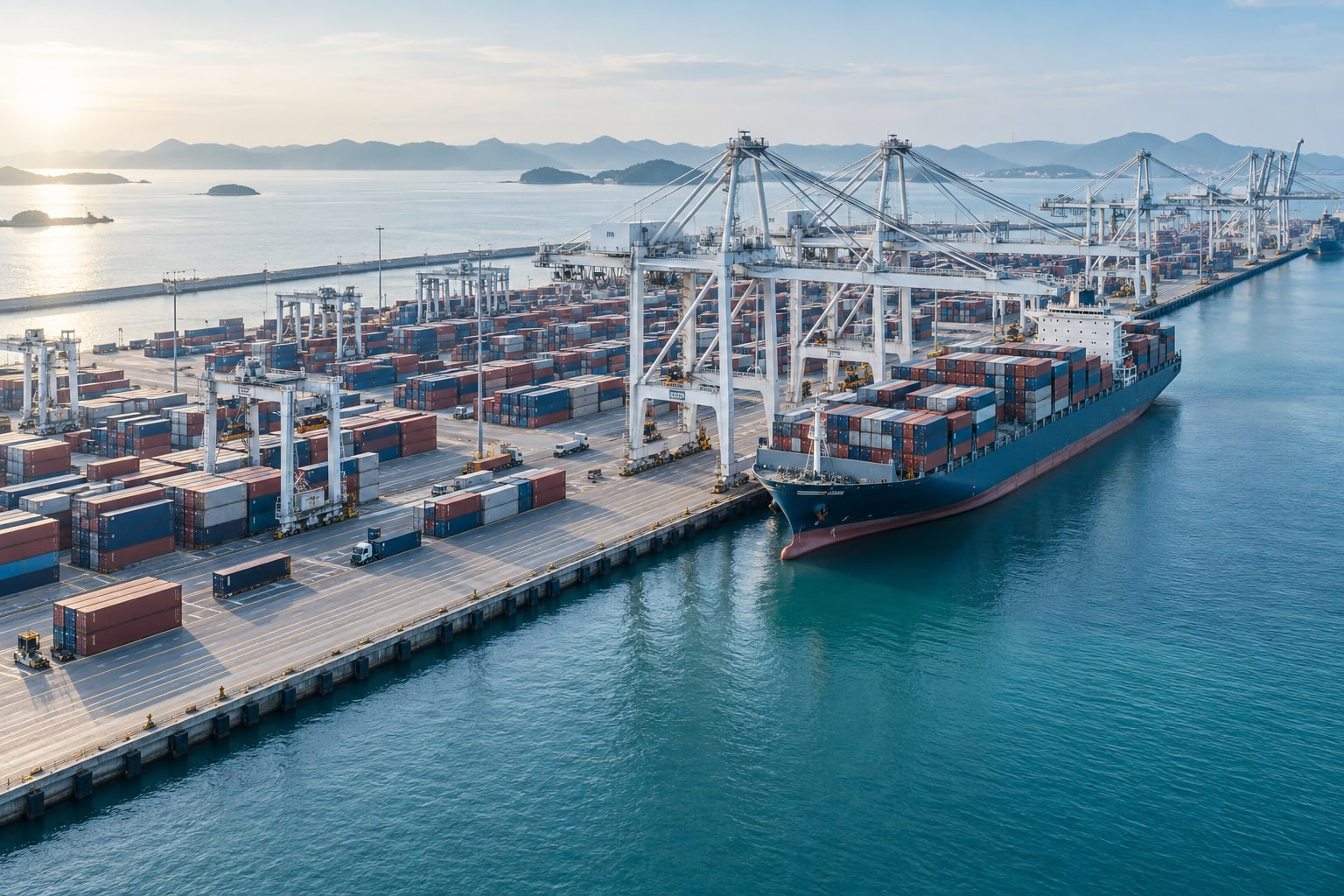

+ Market intelligence: Cameroon trade data can provide market intelligence on various commodities, such as price changes, market share, market size, etc., helping companies understand market trends and competition and better formulate marketing strategies.
+ Business analysis: Cameroon trade data provides import and export data on various commodities, which can be used for economic analysis, helping companies and governments understand import and export trade trends, including trade volume, trends, value, and quantity, to make more informed business decisions.
Cameroon customs data is built on the import declaration records released by Cameroon Customs. The sample declaration (202608) covers HS code 940550100000 (VARIOUS LIGHT) shipped from China (CN) to Cameroon (CM), with 4,145 Kg net weight and USD 8,130 declared value. It carries original French-language fields (LUMIERE DIVERSE), which matter for French-speaking markets in this region; local currency fields in Central African CFA franc (XAF) (sample: 4,600,000); a contract value field (4,600,000 XAF) beside the customs value; duty and valuation fields (Duty XAF 2,006,405; declared XAF amount 4,600,000; declared XAF unit price 69,696.9697; contract USD converted amount 8,126); customs broker fields (WORLD TRANSIT SARL, H0422). The complete field system of this data set is broken down below.
| Data type | Import customs data |
| Data source | Cameroon Customs (GUCE single window declaration) |
| Total fields | 59 fields in the sample, 7 modules |
| Coverage | Declaration, Importer (Buyer), Exporter (Supplier), Other Company, Product, Shipment, Product Price and Quantity |
| Data update | Monthly, by clearance date; historical backtracking supported (sample month: 202608) |
| No. | Module | Fields | Representative Fields | Trade Value |
|---|---|---|---|---|
| 1 | Declaration Basic Information | 5 | Data type; Month; Date; HS code; Declaration No. | ★★★☆☆ |
| 2 | Importer (Buyer) Information | 2 | Importer; Importer company code | ★★★★★ |
| 3 | Exporter (Supplier) Information | 4 | Foreign exporter; Exporter Chinese name; Exporter standard English name; Exporter country | ★★★★☆ |
| 4 | Other Company Information | 2 | Customs broker; Customs broker code | ★★★★☆ |
| 5 | Product Basic Information | 6 | HS code; Code product description; French product name; Detailed product name; Sub-industry; Industry | ★★★★☆ |
| 6 | Shipment Information | 19 | Port; Port code; Transport mode; Transport mode (local language); Trade type; Trade type code; Country of origin; Exporter country; Country of destination; Country of departure; Continent; Economic zone; Declaration No.; Item No. ... | ★★★☆☆ |
| 7 | Product Price and Quantity | 21 | Gross weight; Net weight; Weight unit; Metric ton; Quantity; Quantity unit; USD amount; USD weight-unit price; USD quantity-unit price; USD per-piece unit price; CNY total amount; CNY weight-unit price; CNY quantity-unit price; Central African CFA franc amount ... | ★★★★★ |
🇫🇷 French-Language Fields
Product descriptions are provided in original French (sample: LUMIERE DIVERSE), which matches the working language of local buyers, brokers and customs officers.
💱 Local Currency Pricing (XAF)
Provides a full local-currency price set: amount 4,600,000 XAF, weight-unit price 1,109.77081 and quantity-unit price 69,696.9697.
🧾 Duty and Valuation Fields
Carries duty, tax and valuation detail: Duty XAF 2,006,405; declared XAF amount 4,600,000; declared XAF unit price 69,696.9697; contract USD converted amount 8,126. Useful for building landed-cost models on top of the customs value.
🧑💼 Customs Broker / Agent Fields
Records the clearing party and its code (WORLD TRANSIT SARL, H0422), so you can measure which agents actually handle your product category.
🚚 Transport Mode and Entry Point
Shipment records show transport mode Sea through BUREAU PRINCIPAL DES DOUANES HORS CLASSE DE KRIBI PORT and origin China (CN), which reveals the real logistics corridor used by this market.
| Scenario | Core Fields | Related Analysis Fields |
|---|---|---|
| 🏢 Find Cameroon Buyers | Importer, importer company code, importer country | Code product description, USD amount, month |
| 🔍 Verify Buyer Identity and Scale | importer company code, USD amount, net weight | Month trend, HS code, customs broker |
| 💰 Build a Pricing Model | USD amount, CNY total amount, EUR total amount, Central African CFA franc amount, contract amount | Net weight, metric ton, quantity, quantity unit |
| 🧮 Calculate Landed Cost | Duty and tax fields, FOB / CIF amounts, contract value | Weight unit price, quantity unit price |
| 🏭 Profile Competitors | Exporter, exporter country, exporter standard English name | HS code, code product description, USD amount |
| 🚚 Screen Clearance Channels | Customs broker / agent, customs office, port | Item No., declaration No., month |
| 📈 Size the Market | HS code, USD amount, net weight | Month trend, country of origin, sub-industry / industry |
| 🌍 Check Trade-Agreement Origin | Country of origin, economic zone, economic organization | Exporter country, trade type, port |
💡 Key Value Notes
Cameroon customs data is a import declaration data set from Cameroon Customs. It provides French-language fields let you search and quote in the buyer's own language; a local-currency price set (XAF) alongside USD and CNY values; duty and valuation fields for landed-cost and declared-value checks; a contract value basis (4,600,000 XAF) apart from the customs value; customs broker fields for clearance-channel analysis. Sample record: 4,145 Kg net weight, USD 8,130 declared value.
Q1: What is Cameroon customs data?
Cameroon customs data covers the import trade records published by Cameroon Customs. Each record is one complete customs declaration line and contains the parties, the product, the shipment route and the declared values.
Sample record: VARIOUS LIGHT (HS 940550100000, 202608) shipped from China (CN) to Cameroon (CM), 4,145 Kg net weight, USD 8,130 declared value.
Q2: What are the unique advantages of Cameroon data?
Core features of this data set:
1. French-language fields: descriptions are stored in the original language (e.g. LUMIERE DIVERSE)
2. local-currency price fields (XAF): amount, weight-unit price and quantity-unit price (e.g. 4,600,000)
3. duty and valuation fields: Duty XAF 2,006,405; declared XAF amount 4,600,000; declared XAF unit price 69,696.9697; co
4. customs broker / agent fields: name and code (e.g. WORLD TRANSIT SARL)
Q3: How frequently is the data updated?
The data is refreshed monthly and supports historical backtracking. The sample record is for month 202608 with a clearance date of 2026/8/31, declaration No. SDSD222026IMP019134I.
Q4: How should the French-language product fields be used?
French is used in local trade documents, so the product text is stored in the original language:
- French product name: LUMIERE DIVERSE
- Detailed product name: VARIOUS LIGHT
- Use: search with French keywords instead of English ones, and reuse the official wording on invoices and customs paperwork to avoid classification disputes
Q5: Which currencies and value fields does Cameroon data provide?
Multiple value systems are provided:
USD: amount 8,130, weight-unit price 1.9614, quantity-unit price 123.18182
CNY: total amount 54,764, weight-unit price 13.21218
Central African CFA franc (XAF): amount 4,600,000, weight-unit price 1,109.77081, quantity-unit price 69,696.9697
contract value: 4,600,000 XAF, unit price 69,696.9697
Q6: What is HS code 940550100000 in this data set?
HS code 940550100000 corresponds to Hurricane lamps:
- Code product description: Hurricane lamps
- Detailed product name: VARIOUS LIGHT
- Sub-industry: Furniture
- Industry: Others
In this sample the goods were declared by Importer: SOCIETE CHINA U MI.
Q7: What do the weight and quantity fields mean?
Weight and quantity fields are recorded separately, and unit prices are derived from each basis:
- Gross weight: 4,145 Kg
- Net weight: 4,145 Kg (= 4.145 metric ton)
- Quantity: 66 KGM
- Take care: compare unit prices only on the same basis - weight-unit prices and quantity-unit prices are not interchangeable
Q8: How do I use Cameroon data to develop buyers?
Steps:
1. Filter records where the importer is in Cameroon and the HS code matches your product line
2. De-duplicate buyers by importer company code
3. Grade each buyer by purchase frequency and value (month, USD amount)
4. Look at which exporter they currently buy from, then pitch the same category
Sample application: SOCIETE CHINA U MI (M032517640469C) imported VARIOUS LIGHT from China (CN), so similar products can be pitched to the same buyer profile.
Q9: How do I build a pricing or cost model with this data?
Steps:
1. Extract the value fields: USD amount 8,130 and USD weight-unit price 1.9614; local-currency amount 4,600,000 XAF; CNY amount 54,764; contract value 4,600,000 XAF
2. Note the Incoterms (sample: not stated) to know which cost elements are inside the declared value
3. Add duty and tax from the tax fields (Duty XAF 2,006,405; declared XAF amount 4,600,000; declared XAF unit price 69,696.9697; contract USD converted amount 8,126) to move from customs value to landed cost
4. Recalculate margin in the currency you actually settle in
Sample application: "VARIOUS LIGHT" declared under HS 940550100000, 4,145 Kg, origin China (CN).
Q10: How do I screen clearance channels and logistics routes?
Steps:
1. Group records by customs broker / agent, customs agent, or logistics company (WORLD TRANSIT SARL)
2. Count declaration volume and total net weight handled by each one
3. Review the customs office and port used (sample: - / BUREAU PRINCIPAL DES DOUANES HORS CLASSE DE KRIBI PORT)
4. Prioritize the brokers who already clear your product category
Sample application: this declaration was cleared through WORLD TRANSIT SARL (code H0422).
Q11: How do I analyse import trends with Cameroon data?
Analysis dimensions:
1. Time: aggregate month, USD amount, net weight and record count using the month and clearance date fields
2. Origin: compare country of origin and exporter country shares
3. Product: rank HS codes, sub-industry and industry by value
4. Channel: compare customs offices, ports and brokers to see how flows split
Sample application: the sample is a 202608 record (import), HS 940550100000, which can be used as one data point in a monthly trend line.
Q12: How do I screen price anomalies and audit declared value?
Screening method:
1. Compare the line-level unit price (USD weight-unit price 1.9614) with the same-indicator distribution on the same HS code
2. Check weight consistency (net weight 4,145 Kg against the declaration-level weight where available)
3. Flag records whose values are reported as 0 or whose duty is fully exempted, and exclude them from price averages
4. Manually review outliers that deviate far from the category median
Sample: Duty XAF 2,006,405; declared XAF amount 4,600,000; declared XAF unit price 69,696.9697; contract USD converted amount 8,.
Use this page’s data introduction and sample to assess Cameroon import and export research. Match the record type and available fields to your business question before comparing markets or companies.
Check the reporting country, import or export direction, period, product description or HS code, units and available company fields. Customs records, shipment records and aggregate statistics do not necessarily contain the same information.
Request confirmation of the latest reporting period, historical coverage and update frequency for the specific extract. A sample illustrates its format; it is not evidence of current delivery coverage.
Provide the country, product or HS code, trade direction, required period and the business question. Identify the fields you need so that their availability can be checked before selecting a service.
Tell us the market, company, product or supply-chain question you are working on.
Start an enquiry ↗