

GLOBAL TRADE INTELLIGENCE
GLOBAL TRADE INTELLIGENCE
GLOBAL TRADE INTELLIGENCE
GLOBAL TRADE INTELLIGENCE
GLOBAL TRADE INTELLIGENCE
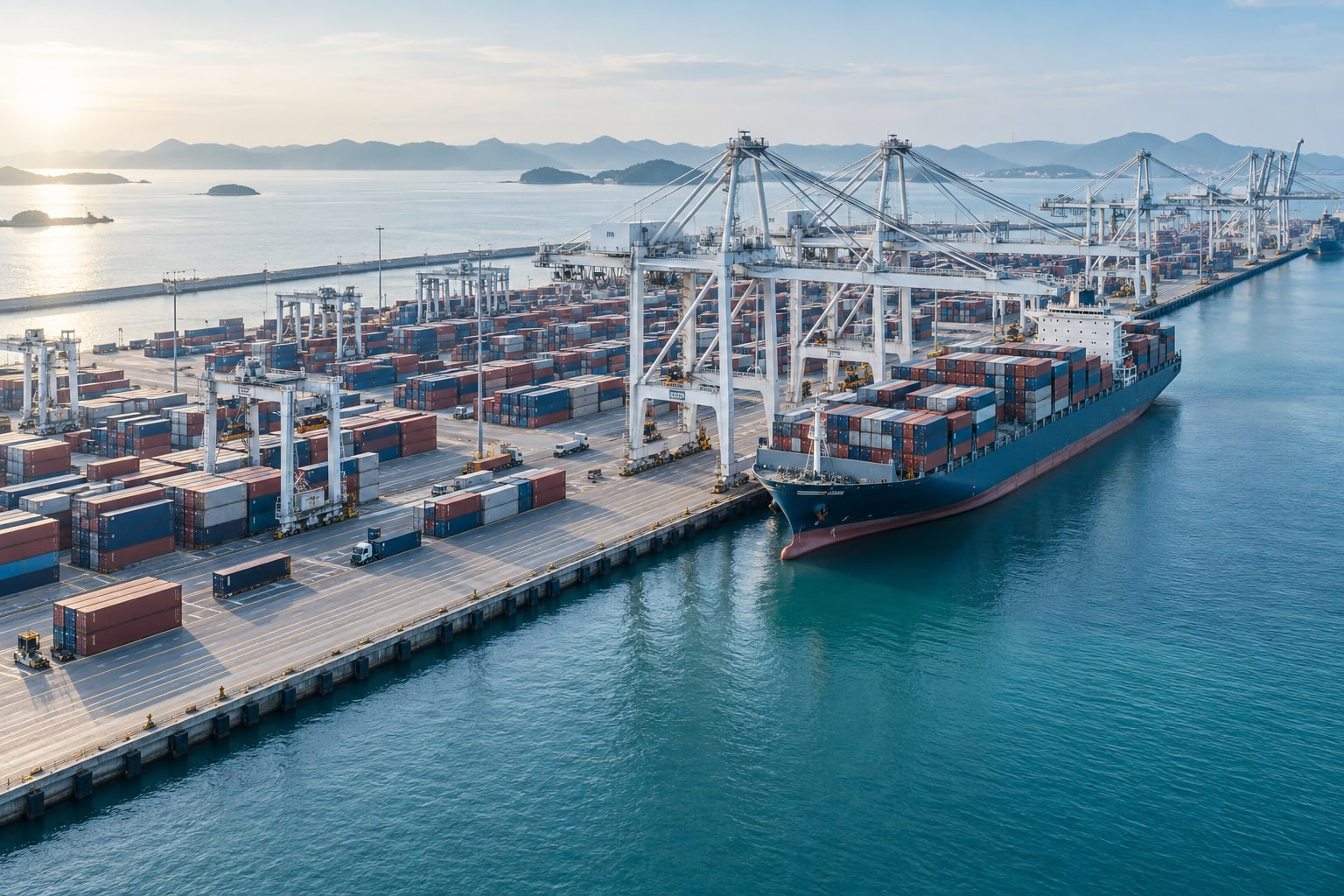

China has long been Egypt’s largest trading partner.
China-Egypt trade and economic cooperation is a flagship within China-Africa and China-Arab collaboration, spanning a wide range of fields—from merchandise trade and investment to infrastructure—and forming a comprehensive economic partnership.
Egypt customs data is based on import declaration records published by Egypt Customs, covering the full-chain trade intelligence of goods entering Egypt. Features: unique Arabic-language fields (importer Arabic name, product Arabic description), multi-currency pricing system (USD + EGP + EUR + CNY), bilingual product descriptions (English + Arabic), Asian trade route data via Aqaba–Dekheila corridor, and comprehensive buyer-seller information. Below is a complete breakdown of the field system.
| Data Type | Import Customs Data |
| Data Source | Egypt Customs |
| Total Fields | 38+ fields, 6 modules |
| Coverage | Importers (with company code + Arabic name + English name), Exporters (with Chinese name + Standard English name), Products (with English + Arabic bilingual descriptions + brand), Shipping, Quantity & Price (5 currencies: USD + EGP + EUR + CNY + contract currency) |
| Data Update | Updated by customs clearance date; supports historical backtracking |
| # | Module | Fields | Representative Fields | Value |
|---|---|---|---|---|
| 1 | Customs Basics | 3 | Month, Date, HS Code | ★★★☆☆ |
| 2 | Importer Information | 4 | Company Code, Arabic Name, English Name, Country | ★★★★☆ |
| 3 | Exporter Information | 5 | Company Code, Arabic Name, English Name, Chinese Name, Standard English Name, Country | ★★★★☆ |
| 4 | Product Information | 8 | HS Code, Arabic Description, English Description, Detailed English Name, Brand, Sub-industry, Industry | ★★★★★ |
| 5 | Shipping Information | 6 | Egypt Port (Port Dekheila), Foreign Port (Aqaba), Origin Continent, Economic Zone, Declaration Number, Declaration Date | ★★★☆☆ |
| 6 | Quantity & Price | 12 | Quantity, Unit, USD Amount + Unit Price, EGP Amount + Unit Price, EUR Amount + Unit Price, CNY Amount + Unit Price, Contract Amount, Foreign Currency Unit Price | ★★★★★ |
🇪🇬 Arabic Fields
Importer name and product description include Arabic original text, enabling accurate identification of Egyptian buyers and Arabic-market product classification.
🌐 Bilingual Product Descriptions
Every product record carries both English and Arabic descriptions — ideal for cross-border sourcing, Arabic-market localization, and MENA region trade analysis.
💱 5-Currency Pricing System
Records include amounts and unit prices in USD, EGP (Egypt Pound), EUR, CNY, and contract currency — cross-referenced for currency risk and transfer pricing analysis.
🏢 Complete Buyer & Seller Records
Full importer info (company code + Arabic + English name) paired with full exporter info (Chinese name + Standard English name) — total 9 fields covering both trade parties.
🏭 Industry Classification
Each record carries Sub-industry + Industry (e.g., Furniture / Others). Enables sector-based buyer discovery and competitive landscape mapping.
🚢 Aqaba–Dekheila Trade Corridor
Egypt import records reveal the Aqaba (Jordan) → Port Dekheila (Egypt) route — a key corridor for goods flowing into Egypt from Asia via Jordan.
| Use Case | Key Fields | Related Fields |
|---|---|---|
| 🏢 Find Egyptian Importers | Importer Company Code, Importer Arabic Name, Importer English Name | HS Code, English Description, Month |
| 🔍 Verify Product Specifications | HS Code, English Description, Arabic Description, Brand | Sub-industry, Industry |
| 💰 Multi-Currency Pricing Analysis | USD Amount, EGP Amount, EUR Amount, CNY Amount, Unit Prices (all currencies) | Quantity, Net Weight |
| 🌍 MENA + Africa Market Entry | Egypt Port (Port Dekheila), Importer Country (Egypt), Origin Continent | Product Description, HS Code |
| 🏭 Identify Chinese Exporters | Exporter Company Code, Chinese Name, Standard English Name, Exporter Country (China) | Product Description, Brand |
| 📈 Cross-Industry Sourcing | Sub-industry + Industry | English Description, HS Code, USD Amount |
| ⏱️ Monitor New Suppliers | Declaration Number, Declaration Date, Month | Exporter Name, HS Code, USD Amount |
⚠️ Data Value Note
Egypt customs data reflects goods declarations recorded at Port Dekheila, not actual physical cross-border flows. Values are self-reported by importers and subject to customs review. AI responses are non-deterministic snapshots — verify critical fields directly. Sample record: LED lamps (HS 9405210000) imported by AL SHAYA EGYPT IMPORT L.L.C from LOGIX FZCO (China) via Aqaba → Port Dekheila, May 2025, USD 10.83 / EGP 544 / CNY 78.
Q1: What is Egypt customs data?
Egypt customs data covers import and export trade records of Egypt. Each record represents a complete customs declaration, including importer, foreign exporter, ports, HS codes, multi-currency amounts, declaration number and trade dates. The sample record is an LED lamps (HS 9405210000) shipment declared on 2025/5/20 by AL SHAYA EGYPT IMPORT L.L.C.
Q2: What unique advantages does Egypt data offer?
Three core strengths:
1. Strategic location visibility: captures routing via Suez / Red Sea / Alexandria corridor — Egypt is the gateway between Asia, Europe and Africa
2. Multi-currency tracking: USD, EUR, CNY, EGP (Egyptian Pound) and contract foreign currency (often AED for UAE free-zone exporters) are recorded in parallel
3. Asia-origin focus: major inbound flows from China (CN), with transit data through regional hubs such as Aqaba (Jordan)
Q3: How frequently is the data updated?
Updated monthly with historical backtracking supported. The sample record shows month 202505, with declaration date 2025/5/20.
Q4: What is HS code 9405210000?
HS 9405210000 = "Lighting units for tables, offices, family sides, or lighting devices with pillars that rest on the floor for indoor lighting, designed to work exclusively with lighting sources powered by light-emitting diodes [LED]".
- Detailed product name: Lamps
- Brand / Model: H&M (H & M)
- Sub-industry: Furniture
- Industry: Others
In short: LED indoor lamps / floor & table lighting fixtures.
Q5: Who is the importer AL SHAYA EGYPT IMPORT L.L.C?
Importer enterprise code: 266902413
Country: Egypt (EG)
Al Shaya is a major Middle East retail conglomerate (Kuwait-headquartered) that operates franchise stores for brands such as H&M, Bath & Body Works, American Eagle, Victoria's Secret, etc. across MENA. The Egypt L.L.C. entity handles sourcing and import of store fixtures, furniture and consumer goods for H&M Egypt — a high-value retail buyer.
Q6: Who is the exporter LOGIX FZCO?
Exporter enterprise code: AE-02-100363348200003
Chinese name: Logix Limited (Logix)
Standard English name: Logix Limited
Country: China (CN)
LOGIX FZCO is a UAE Free Zone Company — typically used as a regional trading hub that connects Chinese manufacturers with buyers across the Middle East and Africa. The "AE-02-..." prefix in the enterprise code signals its UAE free-zone origin.
Q7: How to read the Egypt Port and Foreign Port fields?
- Egypt Port: Port Dekheila — a deep-water port adjacent to Alexandria, handling containers and general cargo
- Foreign Port: Aqaba [El Akaba] — Jordan's only seaport, located on the Red Sea
- Region: Asia / Asia
This routing indicates a typical Aqaba → overland/feeder → Port Dekheila transit pattern used by China- and Asia-origin cargoes entering Egypt via the Red Sea corridor.
Q8: How to interpret the multi-currency amounts?
- Quantity: 1 kilogram (sample / small shipment)
- Contract / Foreign currency amount: 39.762 — most likely AED (UAE Dirham), the natural contract currency for a UAE free-zone exporter
- USD amount: 10.827 (≈ AED 39.762 ÷ 3.6725)
- EUR amount: 9.6
- CNY amount: 78
- EGP amount: 544 (Egyptian Pound, used for local customs valuation reference)
Unit prices per kg: EGP 543.83 / USD 10.83 / AED 39.76 / EUR 9.60 / CNY 78.09. The dual AED/USD/EGP exposure is typical when an Egyptian buyer purchases from a UAE-based trader.
Q9: How to use Egypt data to develop buyers?
Steps:
1. Filter records where importer country = Egypt (EG)
2. Extract importer name, enterprise code, and any contact details
3. Cross-check the buyer via Egypt's commercial registry or VAT database
4. Approach with the same / related product categories
Sample application: AL SHAYA EGYPT IMPORT L.L.C (code 266902413) belongs to the Al Shaya Group — a Tier-1 MENA retail operator running H&M and other brand franchises. It is an excellent buyer for furniture, LED lighting, store fixtures and consumer goods.
Q10: How to identify logistics and clearance pathways?
Steps:
1. Pair the Foreign Port and Egypt Port fields to map routing
2. Count frequency of each port pair to identify common corridors
3. For high-volume corridors, negotiate direct service or block-space agreements
4. For niche corridors, partner with consolidators familiar with that lane
Sample application: Aqaba (Jordan) → Port Dekheila (Egypt) is a known corridor for Red Sea cargo entering Egypt via Jordanian transshipment, often combined with overland trucking through Sinai or feeder vessels.
Q11: How to do cost accounting with multi-currency data?
Steps:
1. Anchor on the contract currency (AED 39.762 ≈ USD 10.827)
2. Add freight, insurance and ancillary fees to compute CIF landed value
3. Apply Egypt's import tariff schedule, VAT and any supplementary duties
4. Convert final EGP cost back to USD/EUR for profit-margin analysis
Sample application: at the recorded unit price (USD 10.83 / kg), a 1 kg sample costs ~USD 10.83 + freight + duty. For larger shipments, leverage the same unit price as a benchmark bid reference, then build volume-based pricing.
Q12: How to optimize supply chain using Egypt data?
Optimization levers:
1. Route planning: China → Aqaba → Port Dekheila is an alternative to direct Suez transit; useful during peak congestion
2. Currency strategy: invoice in USD or AED to avoid EPG volatility on the buyer side
3. Buyer consolidation: group shipments to multiple Al Shaya entities (Egypt, Kuwait, KSA) for better freight rates
4. Compliance readiness: pre-prepare certificates of conformity and Egypt-specific documentation (e.g., Nafeza / ACID) to speed clearance at Dekheila
Q13: How to analyze Egypt's import trade trends?
Analysis dimensions:
1. Time: track monthly import value, weight and declaration count by Egypt
2. Country of origin: monitor top sources — China (CN), UAE, Turkey, EU, Saudi Arabia
3. Product (HS): trend HS 94 (furniture/lighting), HS 85 (electronics), HS 61/62 (apparel), HS 84 (machinery)
4. Company: rank importers (Al Shaya, Mars, etc.) and foreign exporters (LOGIX FZCO and similar FZCO entities)
Sample application: the record is a May 2025 China → Egypt LED lamp shipment via Aqaba, useful for tracking Red Sea transit and China-origin furniture/lighting flows to Egypt.
Q14: How to identify Egypt's market hot products?
Identification methods:
1. Rank HS codes by import value and growth rate
2. Flag fast-growing categories (YoY > 20%)
3. Detect first-time sources or new-to-market products
4. Map against Egypt's domestic industry — Egypt exports textiles, fertilizers, citrus; imports machinery, electronics, wheat, vehicles and furniture / LED lighting
Hot signals:
- Furniture & LED lighting (HS 9405): driven by urban housing, hotel construction and franchise retail expansion (e.g., H&M stores)
- Consumer electronics and home appliances
- Auto parts and motorcycles
Q15: How to assess Egypt trade risk?
Risk model:
1. Currency risk: the Egyptian Pound (EGP) has experienced significant depreciation against USD; consider invoicing in USD or AED
2. Logistics risk: Suez Canal traffic, congestion at Alexandria / Port Dekheila, and Red Sea shipping disruptions can affect transit time
3. Credit risk: large, well-known buyers such as Al Shaya Group are low risk; smaller Egyptian importers require due diligence (commercial registry, tax card, bank references)
4. Policy risk: watch for changes in Egypt's import tariff schedule, advance cargo information (ACI / Nafeza) requirements, and FX repatriation rules
Sample assessment: this shipment involves a strong buyer (Al Shaya) and a stable UAE free-zone intermediary (LOGIX FZCO), with a routing that bypasses Suez — overall low-to-moderate risk profile.
Use this page’s data introduction and sample to assess Egypt import and export research. Match the record type and available fields to your business question before comparing markets or companies.
Check the reporting country, import or export direction, period, product description or HS code, units and available company fields. Customs records, shipment records and aggregate statistics do not necessarily contain the same information.
Request confirmation of the latest reporting period, historical coverage and update frequency for the specific extract. A sample illustrates its format; it is not evidence of current delivery coverage.
Provide the country, product or HS code, trade direction, required period and the business question. Identify the fields you need so that their availability can be checked before selecting a service.
Tell us the market, company, product or supply-chain question you are working on.
Start an enquiry ↗