
GLOBAL BUSINESS SOLUTIONS / SINOBTD

Trade data for logistics.
A commercial
perspective.

Research the companies, products and trading activity behind a logistics market. Build a more informed basis for customer development and account investigation.

For logistics enterprises and freight forwarders connecting their service proposition with relevant trading businesses worldwide.

LOGISTICS COMMERCIAL RESEARCH

The movement.
The company.
The business context.

A productive account discussion connects observed activity with the services your organization can deliver. These workflows help define the evidence to review before that conversation.

01 / SEGMENT & PRIORITISE

Define the businesses
your service can support.

Which trading companies, products and markets are relevant to your service coverage and commercial proposition?

WHAT TO INVESTIGATE
  1. Start with operating fit

    Set the countries, product categories and customer types that match the services your business can provide.

  2. Research the relevant participants

    Investigate reported importers, exporters and other parties in the available sources. Connect the company with the products and markets it appears in.

  3. Build a focused account brief

    Organise the company and activity evidence around the questions needed to assess the account’s logistics requirements.

RESEARCH CAN INFORM

A commercially relevant shortlist for account research, segmented by the information available for your product and market scope.

Qualification focusValidate the company’s current requirements and responsibility for appointing logistics providers through a direct conversation.
02 / INVESTIGATE & DEVELOP

Give the account conversation
a stronger starting point.

What does the recorded activity help your team understand before approaching a potential or existing customer?

WHAT TO INVESTIGATE
  1. Establish the party role

    Distinguish importer, exporter, consignee, notify party and agent fields. Identify the business you need to understand.

  2. Read timing and product context

    Review the relevant goods, dates and repeated activity using a consistent record definition and period.

  3. Connect research with the service offer

    Prepare account-specific questions about routes, cargo requirements, decision makers and the scope of services needed.

RESEARCH CAN INFORM

An account brief that connects observed activity with questions for sales qualification and customer development.

Qualification focusA shipment role or trading relationship does not establish which party holds the logistics contract. Confirm that responsibility separately.

03 / MARKETS & CORRIDORS

Put the trade corridor
in a commercial context.

Which country and product combinations warrant a closer assessment by your commercial and operations teams?

WHAT TO INVESTIGATE
  1. Define the corridor question

    Specify the origin or destination markets, cargo categories and trade direction relevant to your service footprint.

  2. Inspect movement fields

    Where present, review transport, port and location fields with their source definitions and reported roles.

  3. Combine commercial and operational knowledge

    Use the evidence alongside your own service network, operating capabilities and direct customer intelligence.

RESEARCH CAN INFORM

A set of country-product corridors and customer segments for further commercial and operational assessment.

Qualification focusConfirm any required carrier, port or route detail in the relevant source before incorporating it into a logistics workflow.

FIELD INTERPRETATION

Know what a field
can tell your team.

Agree the level of detail required for the task, then review actual source fields. Commercial relevance depends on how the information is interpreted.

Company & party role

RESEARCH USE

Investigate the trading participant and its place in the reported activity.

READ IN CONTEXT

Match the legal entity and clarify its responsibility for logistics decisions.

Product & classification

RESEARCH USE

Segment activity by relevant goods and product categories.

READ IN CONTEXT

Read product wording alongside the HS scope and your cargo knowledge.

Dates & record counts

RESEARCH USE

Review the timing and recurrence of reported activity.

READ IN CONTEXT

Use consistent reporting periods and definitions when comparing companies.

Weight & quantity

RESEARCH USE

Understand reported physical measures where available.

READ IN CONTEXT

Keep gross/net weight and quantity units distinct; confirm the measurement basis.

Ports & transport

RESEARCH USE

Investigate location and movement context where the source supports it.

READ IN CONTEXT

Confirm port roles, mode definitions and field completeness for the task.

Goods value & currency

RESEARCH USE

Put the product activity into a commercial context.

READ IN CONTEXT

Interpret goods value separately from freight spend or logistics revenue.

FROM THE PLATFORM TO THE QUESTION

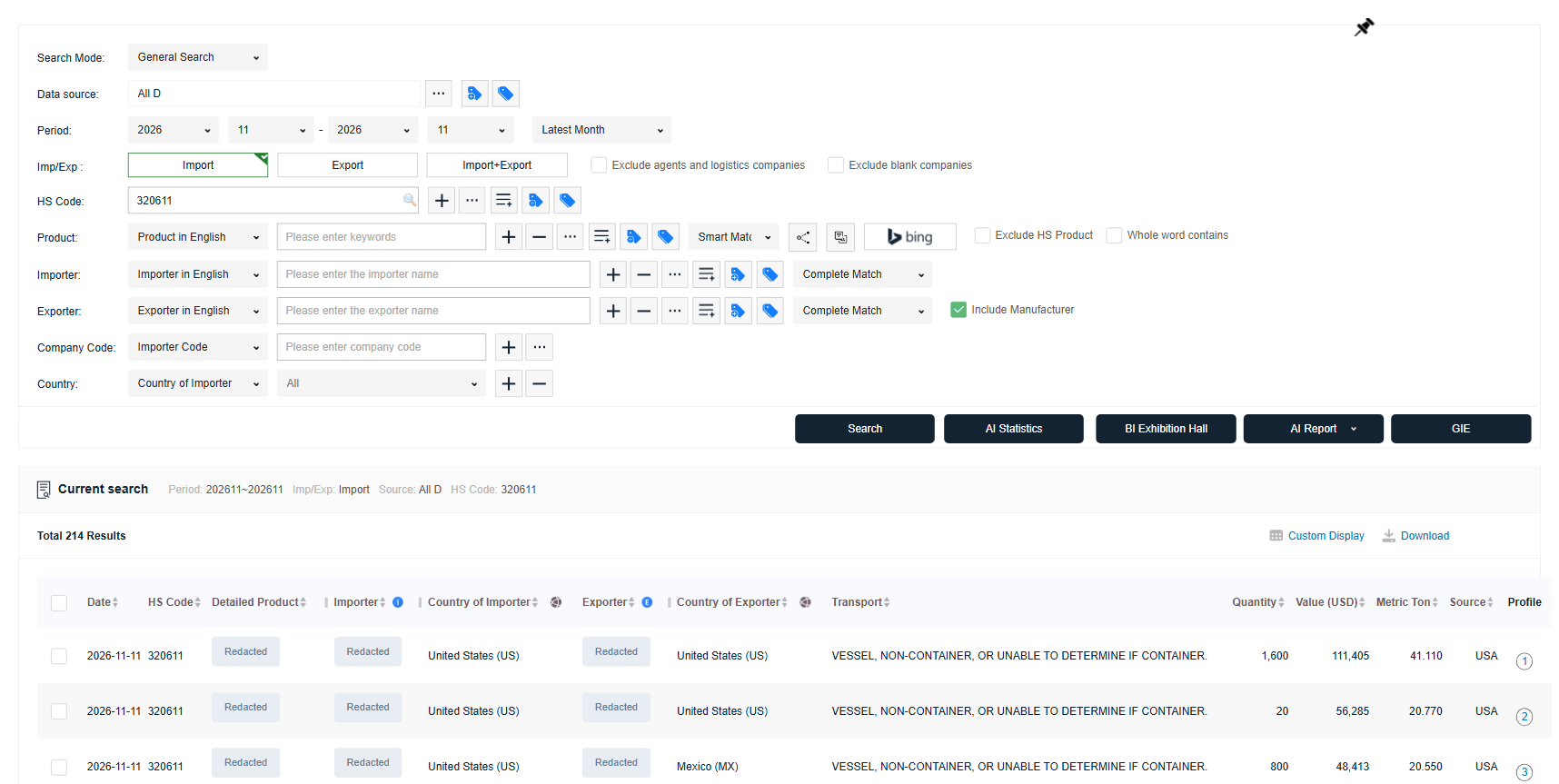
See the record structure
before selecting the data.

A relevant demonstration should show the company roles and movement fields your team needs to evaluate. Read those fields alongside the product, date and source attached to the record.

BTD7.0 / INTERFACE EXAMPLE Redacted BTD7.0 trade-search interface showing reported company roles, product, dates and movement fields.
BTD7.0 Global Search / Selected Nov 2026 query. Company identities and product wording are redacted.
EVALUATE WITH SINOBTD

Your service footprint.
A focused customer-research brief.

Explain the markets, cargo categories and customer roles that fit your business. We can demonstrate relevant data and assess the available detail against your customer-development workflow.

Review a workflow for your target accounts, then agree the data, access and support your team needs.

QUESTIONS / ANSWERS

A clearer basis
for the discussion.

Understand the research scope, interpretation and service relationship before selecting a product.

How can logistics companies use trade data?+

Trade data can support customer segmentation, account research and the investigation of country-product corridors. Define your service proposition first, then assess the company, product and movement fields available for that commercial task.

Does every source contain port or carrier information?+

No. Transport, port, carrier and route detail vary by source. Review the fields and an actual sample relevant to your market before selecting data for a movement-specific workflow.

Can a consignee be treated as the buyer of logistics services?+

A consignee is a reported party role. It does not establish who selects or contracts with a logistics provider. Validate the company identity, commercial responsibility and current requirements directly.

What makes a logistics demonstration useful?+

Bring a target market, product or customer segment and explain your service coverage. Agree which company roles, dates, quantities and movement fields need to be evaluated so the demonstration reflects the team’s actual research.