
GLOBAL TRADE INTELLIGENCE
GLOBAL TRADE INTELLIGENCE
GLOBAL TRADE INTELLIGENCE
GLOBAL TRADE INTELLIGENCE
GLOBAL TRADE INTELLIGENCE
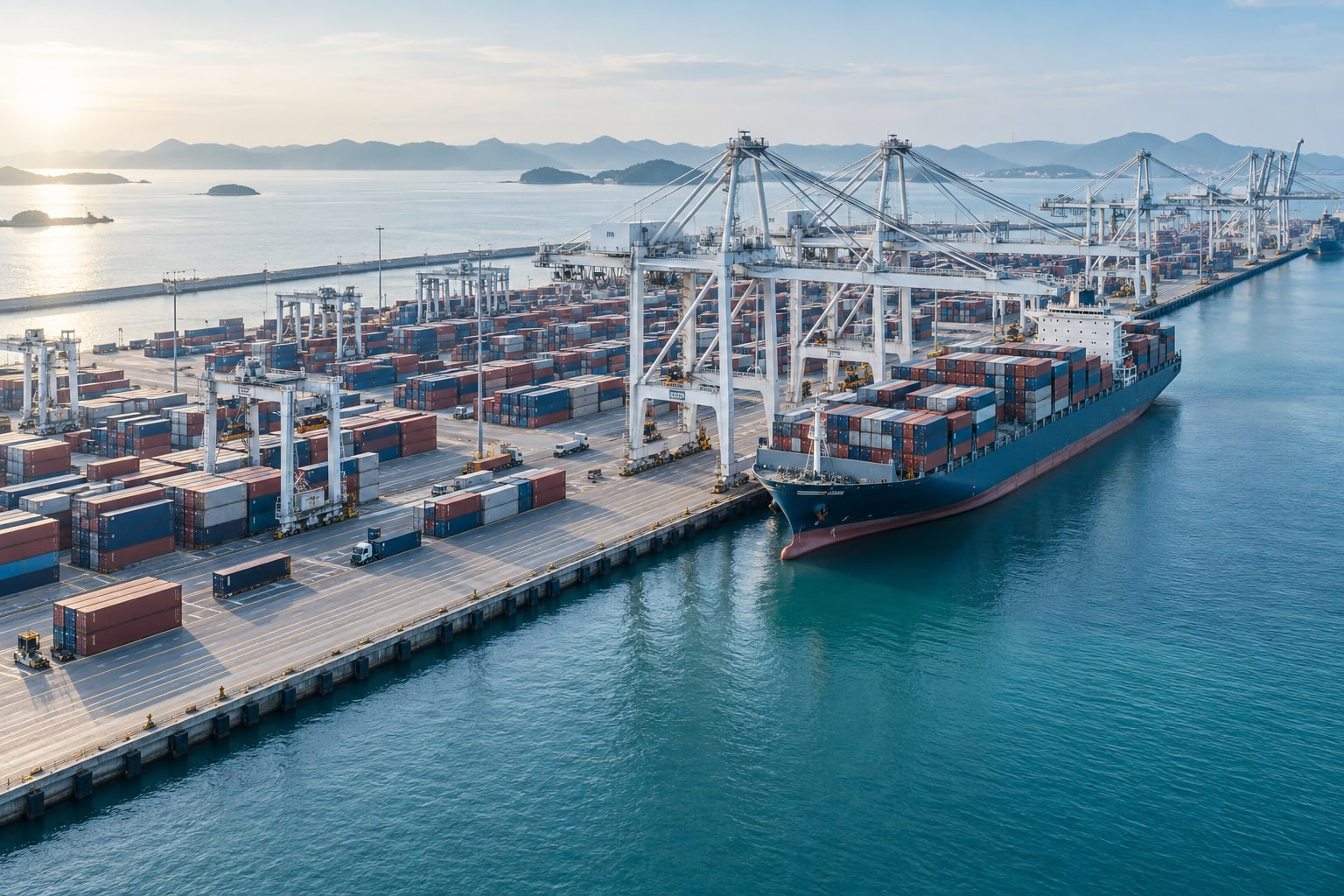

+ US Trade Data can provide trade analysis, including information on trade partners, types of goods, and value of goods, which can help in formulating trade policies and strategies.
+ Trade Data can be used for competitive intelligence, helping businesses understand their competitors' import and export trade situation to improve their competitiveness.
+ Trade Data can be applied in risk management, economic research, and data mining fields to provide valuable information and decision support.
For U.S. trade research, distinguish a country-level statistical total from a shipment or company-level record before comparing results. Check the reporting direction, transport coverage and available party fields in the specific sample. A shipment record is not automatically a complete picture of a company’s imports or exports.
Begin with a product or HS code and a reporting period. Where company fields are supplied, inspect the role of each named party and compare repeated activity rather than treating one record as proof of current purchasing intent.
Use these checks when evaluating a data extract for United States; field availability depends on the selected source and period.
Product and classification. Read the product description alongside any supplied HS code. Confirm whether classification is present in the source record or added during processing before grouping products.
Company and party role. Identify whether a company is recorded as an importer, exporter, shipper or consignee. Keep contact information separate from the evidence of a shipment.
Value and transport coverage. Check whether value is reported in the selected record type and which transport modes are covered. Missing value is not a zero-value transaction.
Check each direction separately for record type, period, transport coverage and available fields. Compare like-for-like extracts; a company-level shipment selection should not be compared directly with a national statistical total.
U.S. imports or exports; product description or HS code; period; required company roles; transport modes; whether value or quantity is essential.
Discuss United States trade data requirements →USA Customs Data (US Import Bills) is an AMS/bill-of-lading level dataset built from US-bound ocean shipment filings — the deepest logistics dataset in the Americas series. Each record captures the dual B/L structure (master B/L + house B/L with carrier codes), three-layer goods descriptions (product detail, shipper's B/L text, forwarder's B/L text) with HS codes, the full vessel chain (name, flag, IMO, carrier code, NVOCC, dual carrier), port-to-port routing incl. transshipment and "NOT DECLARED" fields, and container metrics (units, weight, TEU, package count). Below is a complete breakdown of the data field system, illustrated with a sample record (US import, September 2026).
| Data Type | US Import Bills (AMS / B/L level) |
| Data Source | US Customs AMS filings / ocean B/L records |
| Total Fields | 80+ fields across 6 major modules |
| Coverage | Shipper (incl. freight forwarder), Consignee (state/city/ZIP), Notify Party, Goods (3-layer descriptions + HS), Logistics (vessel, flag, carrier code, NVOCC, transshipment, ports), Quantity & Containers (units, weight, TEU, boxes) |
| Update Frequency | Updated continuously by arrival date; deep historical archive (sample record: arrived 2026/9/14) |
| No. | Module Name | Fields | Representative Fields | Trade Value |
|---|---|---|---|---|
| 1 | B/L Basics | 3 | Arrival Date (2026-09-14), House B/L No. (BWLESHA10216298), Master B/L No. (MAEU275496734) | ★★★☆☆ |
| 2 | Shipper (Foreign Supplier) Information | 6 | Shipper (ZHEJIANG UVCHEM SPECIAL COATINGS CO), Country (China), Address (158 JINKUI ROAD PUDONG NEW AREA SHA), Freight Forwarder (SHANGHAI MILKWAY CHEMICAL LOGISTIC + address) | ★★★★☆ |
| 3 | Consignee (US Buyer) Information | 6 | Consignee (ALBEA COSMETICS AMERICA INC), State (TEXAS, TX), City (BROWNSVILLE, TX), ZIP (78521), Notify Party (same) with full street address (2344 N Central Avenue, Brownsville TX 78521) | ★★★★★ |
| 4 | Goods Descriptions & HS | 7 | Product Detail (KLEENBOT C40 UN3481 CLASS9 WORK STATION...), Shipper B/L Text (POLYESTER COATINGS), Marks (N/M), HS Code (320820 850760), HS Description (320820 PAINTS AND VARNISHES... BASED ON ACRYLIC OR VINYL POLYMERS IN A NONAQUEOUS MEDIUM), Industry (Chemicals), Sub-Industry (Other Chemicals) | ★★★★☆ |
| 5 | Vessel & Routing Chain | 18 | US Destination (LOS ANGELES, CA), Foreign Loading Port (SHANG HAI, SHANGHAI, CHINA MAINLAND), Origin (China, CN), Carrier Code (BWLE = BLUE WORLD LINE), Transshipment Country (CHINA), Vessel (GUNHILDE MAERSK, flag DENMARK) | ★★★★★ |
| 6 | Vessel Chain Extended & Quantity | 15 | Final Destination (NOT DECLARED), Booking Place (SHANGHAI, CHINA), Actual Arrival (2026/9/14), Transport (VESSEL, CONTAINERIZED), IMO (9359026), Est. Departure (2026/9/2), Dual Carrier (MAERSK LINE), Discharge Area (WEST), Destination State (CALIFORNIA, CA); Quantity (358 DRM), Weight (5,692 KG / 5.69 tons), TEU (0.16), Boxes (510) | ★★★★★ |
🧾 Dual B/L + NVOCC Structure
Master B/L (MAEU275496734, Maersk) vs House B/L (BWLESHA10216298, NVOCC BLUE WORLD LINE / BWLE) with the dual-carrier field (MAERSK LINE) — the actual ocean-contract hierarchy of US imports is exposed, not flattened.
📝 Three-Layer Goods Descriptions
The same cargo appears as KLEENBOT C40 UN3481 CLASS9... (product detail incl. UN hazardous classification), POLYESTER COATINGS (shipper text) and the HS description (acrylic/vinyl paints, nonaqueous) — reconcile all three for true SKU understanding, hazmat flags included.
🗺️ Full Vessel Chain + Honest Blanks
Vessel GUNHILDE MAERSK (flag DENMARK, IMO 9359026), transshipment country CHINA, discharge area WEST, and a literal "NOT DECLARED" final-destination field — the dataset reports what was actually filed, including unknowns, instead of imputing them.
📦 Container Metrics for Sizing
Quantity (358 DRM drums), weight (5,692 KG / 5.69 tons), TEU 0.16 and 510 boxes — LCL-fraction metrics that enable true volume-weighted market sizing (this record is a ~1/6 container share, not a full box).
| Scenario | Core Fields | Correlated Fields |
|---|---|---|
| 🏢 Map US Buyers by Region | Consignee, State/City/ZIP (TEXAS / BROWNSVILLE / 78521) | HS Code, Quantity, Arrival Date |
| 🚢 Carrier & NVOCC Analysis | Carrier Code (BWLE), Master/House B/L, Dual Carrier | Vessel, Transshipment Country, Ports |
| ⚠️ Hazmat & Compliance Screening | UN3481 CLASS9 fields, Vessel Flag, IMO | Goods Descriptions, Shipper |
| 📦 LCL/TEU Market Sizing | TEU (0.16), Weight (5,692 KG), Boxes (510) | HS Code, Month |
| 📈 Sourcing Shift Analysis | Loading Port (SHANGHAI), Origin (China, CN), Transshipment | Destination Port (LOS ANGELES, CA), Month |
💡 Data Value Highlight
USA Import Bills deliver the deepest logistics detail in the series: dual B/L hierarchy with NVOCC codes, three-layer goods text with UN hazmat flags, full vessel chain (name/flag/IMO/booking/discharge), honest "NOT DECLARED" blanks, and TEU-fraction container metrics — the backbone dataset for US-bound sourcing-shift, carrier and hazmat-compliance research.
Q1: What is USA Customs Data (US Import Bills)?
USA Import Bills is an AMS/bill-of-lading level dataset of US-bound ocean shipments. Each record contains the shipper (and its freight forwarder), the US consignee (state/city/ZIP), notify party, three-layer goods descriptions with HS codes, the full vessel chain (name, flag, IMO, carrier code, NVOCC, dual carrier, transshipment), routing incl. destination ports and discharge areas, and container metrics (units, weight, TEU, boxes). The sample record shown is a September 2026 containerized import of polyester coatings (HS 320820) from ZHEJIANG UVCHEM SPECIAL COATINGS CO (Shanghai) to ALBEA COSMETICS AMERICA INC (Brownsville, TX) via LOS ANGELES on the GUNHILDE MAERSK.
Q2: How is US Import Bills data different from declaration data?
US import bills come from AMS filings:
- They include: dual B/L numbers (master + house), NVOCC/carrier codes, vessel name/flag/IMO, transshipment, TEU metrics, forwarder identity, UN hazmat flags in descriptions.
- They lack: declared values and duty lines (no pricing analytics).
- Best for: sourcing-shift tracking, carrier/NVOCC analysis, hazmat screening, buyer mapping by region.
- Note: unlike many countries, US B/L data DOES carry HS codes (this sample: 320820 850760) — a significant analytical bonus.
Q3: How frequently is the data updated?
Updated continuously by actual arrival date, with estimated departure fields for forward-looking analytics. The sample record arrived 2026/9/14 (est. departure 2026/9/2 — a 12-day Shanghai→LA transit).
Q4: What do the two B/L numbers and carrier codes mean?
- Master B/L (MAEU275496734): issued by the actual ocean carrier — the MAEU prefix identifies Maersk Line, confirmed by the dual-carrier field.
- House B/L (BWLESHA10216298): issued by the NVOCC consolidator — BLUE WORLD LINE, carrier code BWLE, matching the carrier-code field.
- Read together: the Chinese shipper booked through an NVOCC, which bought space from Maersk. The dual structure lets you analyze both the ocean-carrier market (by MBL) and the consolidator market (by HBL) separately.
Q5: How do I read the three-layer goods descriptions?
- Product detail: "KLEENBOT C40 UN3481 CLASS9 WORK STATION..." — brand/model plus UN3481 Class 9 (lithium-battery-containing equipment) hazmat classification.
- Shipper's B/L text: "POLYESTER COATINGS" — the shipper's own goods summary.
- HS description: 320820 paints/varnishes based on acrylic or vinyl polymers in a nonaqueous medium.
Reconciliation insight: the consignment mixes coating goods with UN3481-classified equipment — mixed-cargo containers are exactly what single-description datasets hide. Use HS code (320820 850760) for consistent aggregation, descriptions for SKU/hazmat detail.
Q6: What does "NOT DECLARED" final destination mean?
The vessel chain reports exactly what was filed: final destination NOT DECLARED (the container may be re-exported, delivered to an inland point not yet known, or simply not filled). The discharge area is WEST (US West Coast) with destination state CALIFORNIA, CA and port LOS ANGELES, CA. Rule: never impute — segment "NOT DECLARED" records separately and use destination state/port as the best available geography.
Q7: How do the container metrics work?
This record: quantity 358 DRM (drums), weight 5,692 KG (5.69 tons), TEU 0.16, 510 boxes.
- TEU 0.16 = a one-sixth container share — an LCL/fractional shipment inside a consolidated box, consistent with the house B/L structure.
- Sum TEU across records for true volume-weighted market sizing (naive record-counting would overstate full-container demand).
- Weight-per-TEU (≈ 35.6 tons/TEU equivalent here) flags density: heavy liquid cargo.
- 510 boxes vs 358 drums reveals inner/outer packaging structure.
Q9: How do I map US buyers by region?
Steps:
1. Filter by HS code (320820-type coatings) or goods keywords.
2. Group consignees by state/city/ZIP (ALBEA COSMETICS AMERICA INC, BROWNSVILLE, TX 78521).
3. Weight by TEU and weight, not record count.
4. Overlay destination state vs discharge area to find inland-distribution patterns (TX buyer via LA port here).
Q10: How do I analyze carriers and NVOCCs?
Steps:
1. Group by master-B/L prefix (MAEU, ...) for ocean-carrier share.
2. Group by house-B/L carrier code (BWLE = BLUE WORLD LINE) for NVOCC share.
3. Cross with vessel name/flag (GUNHILDE MAERSK / DENMARK) and transshipment country (CHINA).
4. Track transit time using estimated departure vs actual arrival (12 days here) per carrier.
Q11: How do I screen hazmat and compliance exposure?
Steps:
1. Search descriptions for UN numbers and classes (UN3481 CLASS9 here).
2. Map which shippers and consignees move hazardous cargo and on which vessels (flag/IMO fields).
3. Cross-check vessel flags (DENMARK) against your compliance lists.
4. Segment hazmat vs non-hazmat flows per HS code for risk-weighted analytics.
Q12: How do I analyze US sourcing shifts?
Analytical dimensions:
1. Origin: loading port (SHANGHAI) and origin country (China, CN) trends per HS chapter.
2. Routing: transshipment country (CHINA here) and port-pair shifts (Shanghai→Los Angeles).
3. Mode: VESSEL, CONTAINERIZED with TEU weighting.
4. Timing: estimated departure vs actual arrival transit-time trends by carrier.
Q13: How do I spot hot flows and assess risk?
Hot flows: rank TEU-weighted import volume by HS code and consignee; flag YoY growth > 20%; coatings and specialty chemicals (this sample's category) track US manufacturing and cosmetic-packaging demand.
Risk framework:
1. Hazmat risk — UN3481 Class 9 flags lithium-containing equipment inside mixed cargo; audit stowage and documentation partners.
2. Concentration risk — single-origin (China) dependence visible at port level; monitor shift to Vietnam/India-type origins.
3. Data risk — "NOT DECLARED" fields and LCL fractions require TEU/weight-based aggregation, never record counts.
Use this page’s data introduction and sample to assess United States import and export research. Match the record type and available fields to your business question before comparing markets or companies.
Check the reporting country, import or export direction, period, product description or HS code, units and available company fields. Customs records, shipment records and aggregate statistics do not necessarily contain the same information.
Request confirmation of the latest reporting period, historical coverage and update frequency for the specific extract. A sample illustrates its format; it is not evidence of current delivery coverage.
Provide the country, product or HS code, trade direction, required period and the business question. Identify the fields you need so that their availability can be checked before selecting a service.
Tell us the market, company, product or supply-chain question you are working on.
Start an enquiry ↗